
Why this story?
“We packed up and moved away without ever knowing their names.”
The line
Grant Overstake grew up on Holyoke Street in Wichita, one block from the line.
Hillside was the line. On one side sat 67214, the redlined African American community, placed there by design. On the other sat 67220, where the Overstakes lived. Two federal documents drew that line. Both are below.
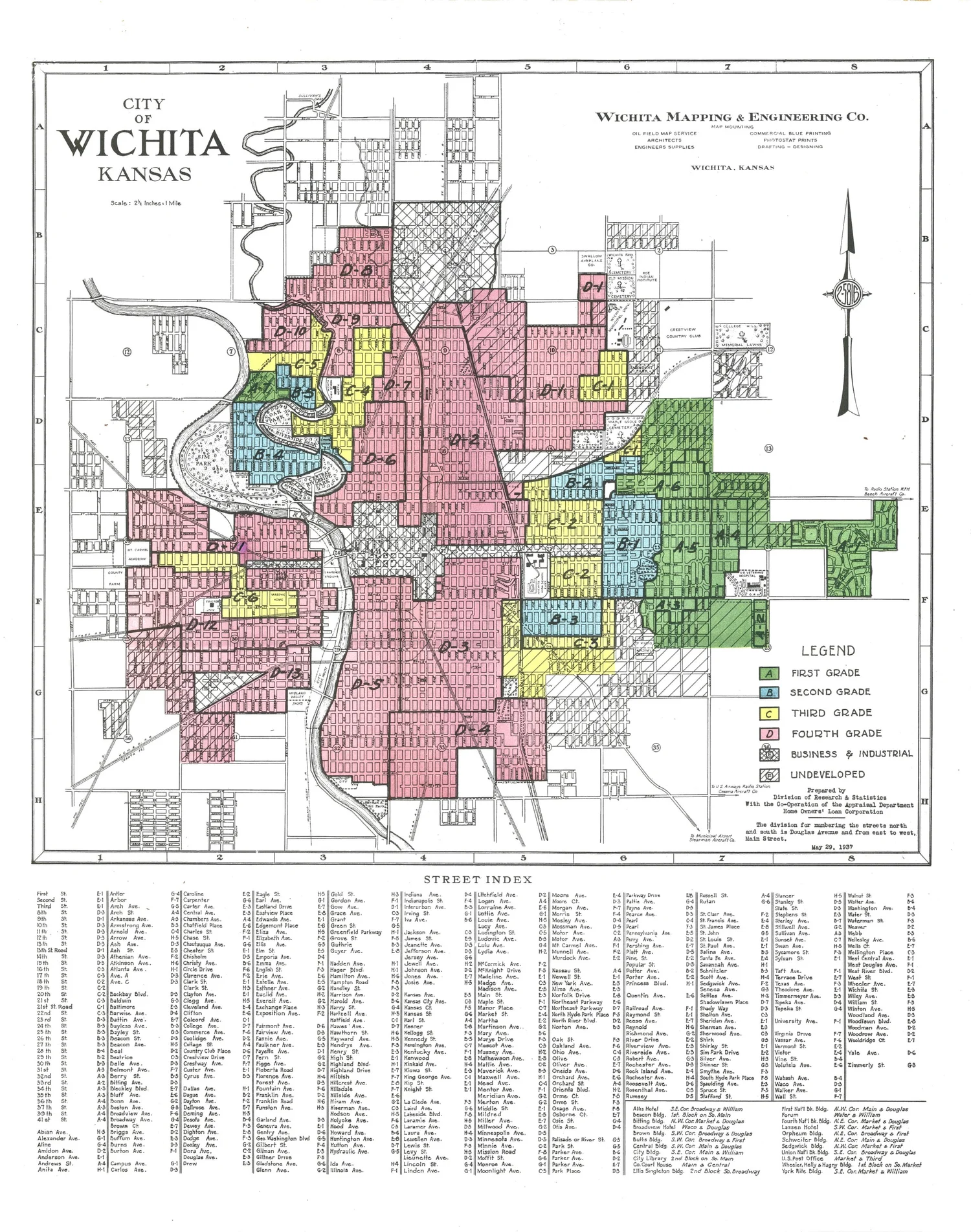
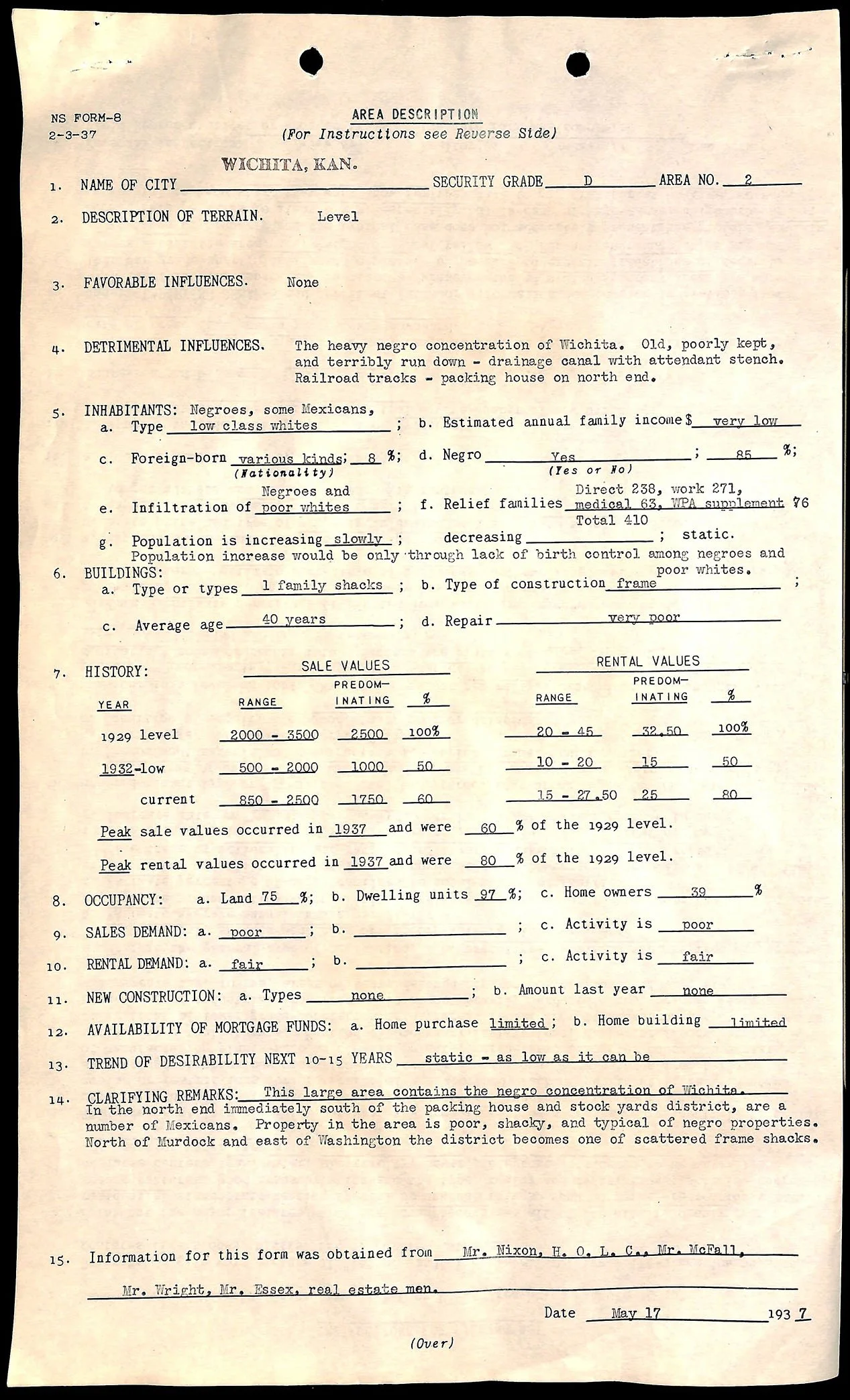
His family did not stay
Those documents were three decades old when a Black family crossed the redline and moved into the vacant house next door. No law protected that move. Not yet. His mother watched from the kitchen window. He describes her as a good and loving woman who did the best she could, housebound by health problems, and afraid of Black people, which is not what she called them. When the moving truck came, she came unglued.
His parents did not build a fence. They put up a for-sale sign.
We moved away within six months. We were gone. We packed up and moved away without ever knowing their names.
The Real Education of TJ Crowley is not a memoir. It is the road not taken. TJ Crowley stays. The Overstakes left. Overstake set the novel in 1968 for what that year carried: the assassination of Dr. King in April, the riots that followed, and the Fair Housing Act signed one week later. The novel answers a question the boy on that street never got to ask.
The door back in
Josephine “Mama Jo” Pace Brown founded the ARISE Ensemble, a multicultural Wichita choir. Decades later, Grant and Claire Overstake joined it.
That choir opened every door this book required.
Josephine Brown won election to the Wichita Board of Education as the first Black woman to serve, and later presided over it. She fought separate and unequal schooling. She confronted dentists who booked Black patients only on Thursday afternoons. She led a delegation of Black women into downtown stores to try on dresses, at a time when those stores forbade it.
Her husband, Dr. Val Brown Sr., treated more than eight thousand patients across forty-seven years and became the first Black physician in Wichita to hold hospital admitting privileges, in an era when the hospital placed every Black patient on one floor.
At the ensemble’s Christmas party in 2014, held at the Brown family home, Dr. Brown welcomed him in and told him his life story.
I was thunderstruck by what I discovered about myself. Oh, I thought I was a really strong ally. I thought I really knew things. I was just beginning.
He went back to his writing group and said, “I think I have an idea for a book.”
He has since named what came first:
Before there could be a real education of TJ Crowley, there first had to be a real education of Grant Overstake.
He refused to write it alone
He drafted the novel between 2014 and 2016, then went looking for people who could tell him he was wrong.
Dr. Gretchen Cassel Eick, author of Dissent in Wichita: The Civil Rights Movement in the Midwest, 1954 to 1972, served as historical consultant. His verdict on that partnership: “Whatever is right in the story comes from Gretchen. Whatever is wrong in the story comes from my own dumb mistakes.”
Edith Knox of the Wichita African American Council of Elders read early drafts and told him to leave the racist language where it stood.
Andy Bias, a school friend who sings bass beside him in ARISE, moved to Wichita from North Carolina in 1968. Overstake recorded their conversations and had them transcribed. Bias told him something fifty years of friendship had not surfaced: before Wichita, he had never attended school with white children.
One editorial decision belongs to the advisors rather than the author. Every Black person involved told him to refuse to sugarcoat. He softened the language from the original drafts for one reason: so a teacher could read the book aloud in a classroom.
The classroom stood in view before the book existed.
Claire Overstake read it first. She read the manuscript in his handwriting, page by page as he wrote it, the same left-handed scrawl she had been reading since they were in high school and he was a young journalist already breaking in. Then she checked it against the calendar. One school year. Every fact, every show, every date, every song had to fit inside that year or it came out. What TJ Crowley learned, they learned together.
What it became
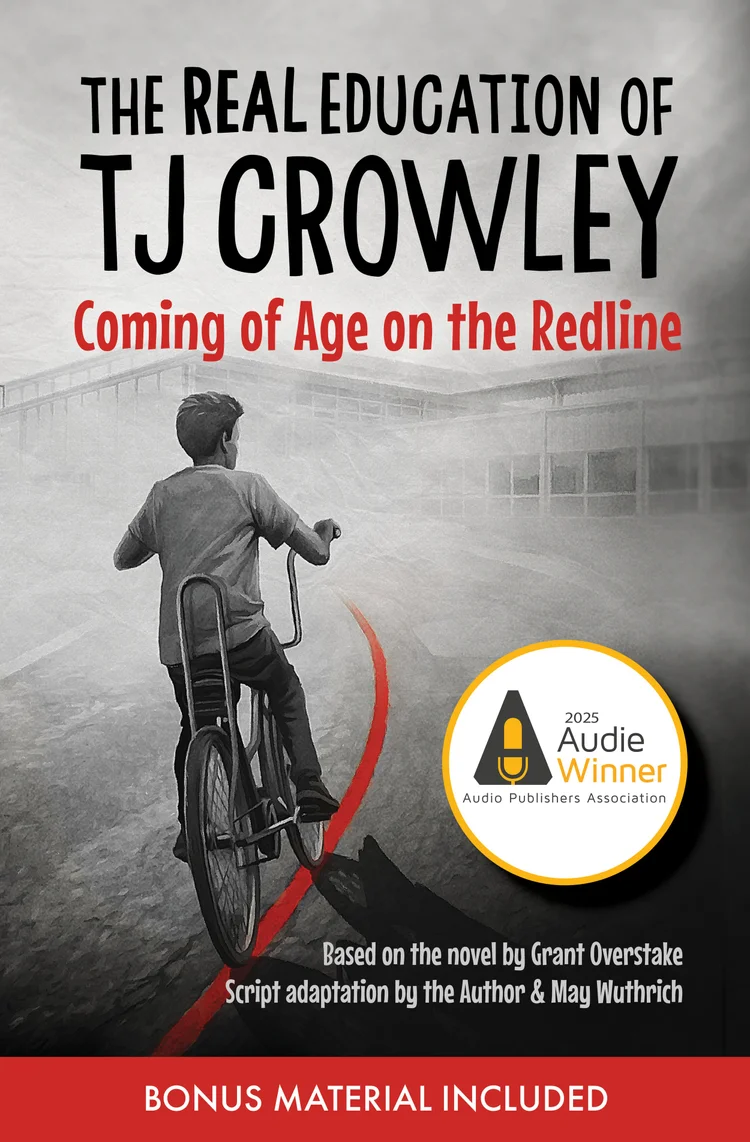
The novel published in 2018 and became a local bestseller. It won the Kansas Authors Club's J. Donald Coffin Memorial Book Award. Wichita State University adopted it for two courses inside fourteen months.
Then it became a full-cast audio drama, adapted by Overstake and May Wuthrich (co-author of the script adaptation, producer and director), performed by fifteen actors in twenty-four roles, with the ARISE Ensemble singing the spirituals. Sheila Brown Kinnard, daughter of Val and Josephine, performs a character drawn from her own mother’s life.
It won the 2025 Audie Award, Young Adult, an AudioFile Earphones Award, and a gold medal, Outstanding Books of the Year, 2025 Independent Publisher Book Awards. The only audiobook so honored.
In June 2024 the premiere returned to the neighborhood where the story is set. The boy whose family drove away came back with a recording of what might have happened had they stayed, and the choir that opened the door sang on it.
Your students can perform it, free
Scene cuttings from the audio drama, timed and marked for competition, with the performance clearance printed on the page. No royalty. No application.
The Redline Scenes
grainvalleypress@gmail.com