
We heard you.
A consolidated note from Grant Overstake and BookLab to the publishers we met in Chicago, and to the members who could not be in the room.
The books are good. The day is full.
Catholic publishers in Chicago described the same condition in different words. The overload is real. Just keeping up takes everything. There is nothing left over to go back into the archive and ask the question every publisher knows is waiting there.
That is the question this page is about.
Four languages. One book that belongs in every search.
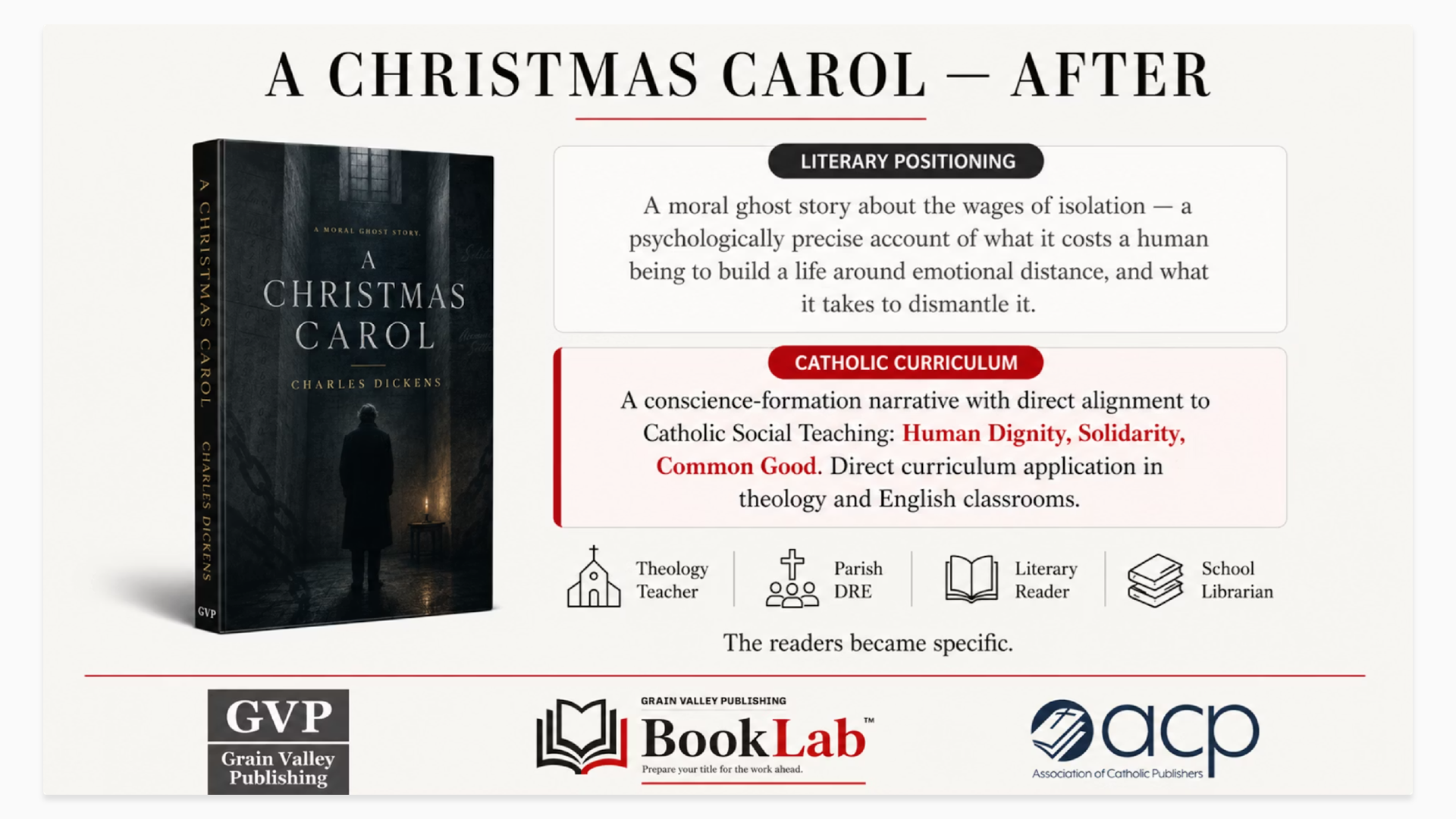
Right now, four different people are looking for a book you may have already published. They will not type the same words. They are all looking for the same title.
The theology teacher
"conscience formation novel for ninth grade"Looking for a book she can put on a required reading list this semester.
The parish DRE
"Lenten reading series on how we have lived our lives"Planning a six-week adult formation arc.
The school librarian
"conscience formation public domain"Her budget is spent. Her semester is not.
The literary reader
"books like Gilead"Browsing a recommendation engine. Looking for moral weight and a quiet voice.
If a book is described in one language, it is visible in one room. If it is described in four, it is visible in four. Most books are described in one.
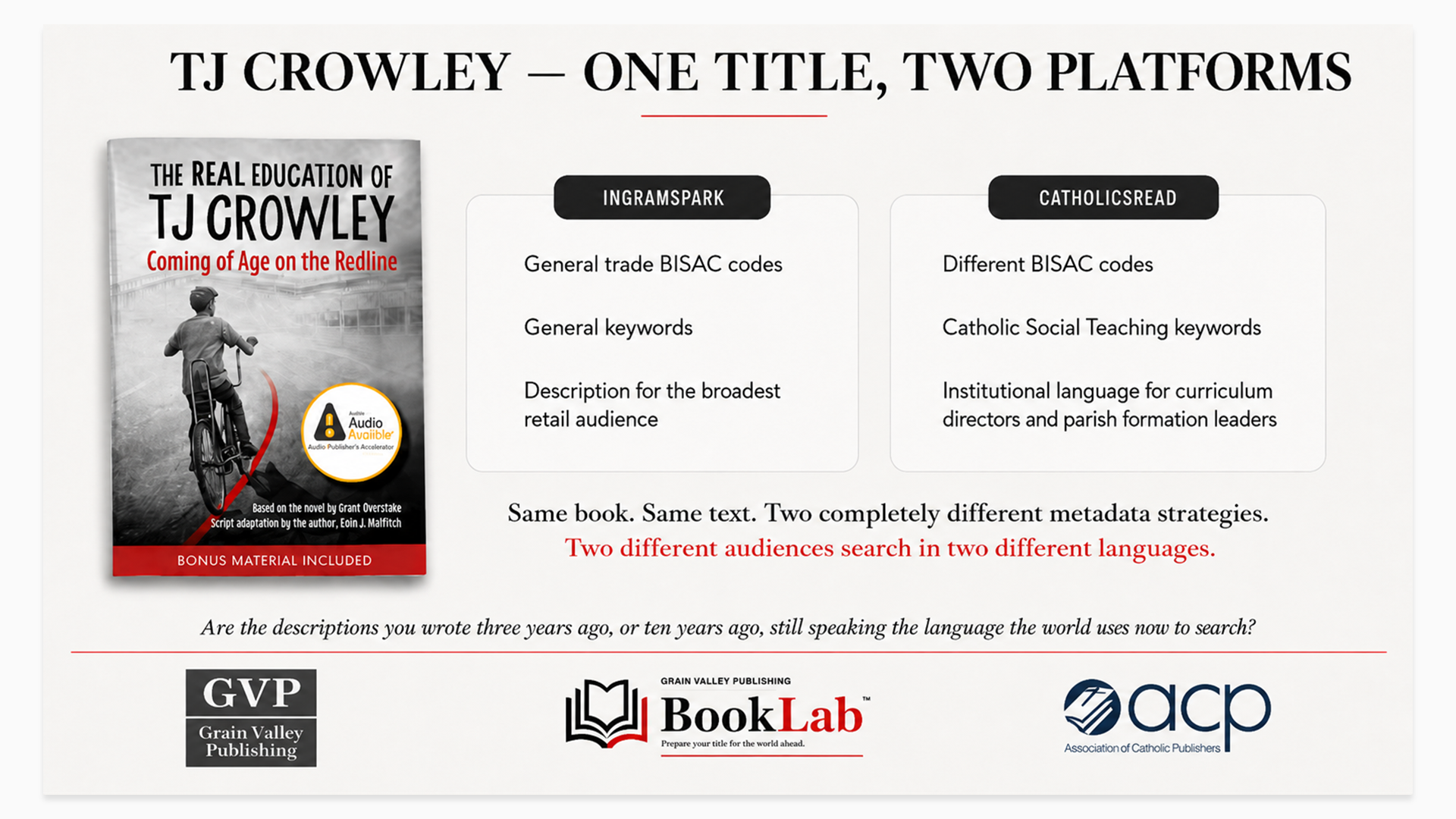
Same text. New rooms.
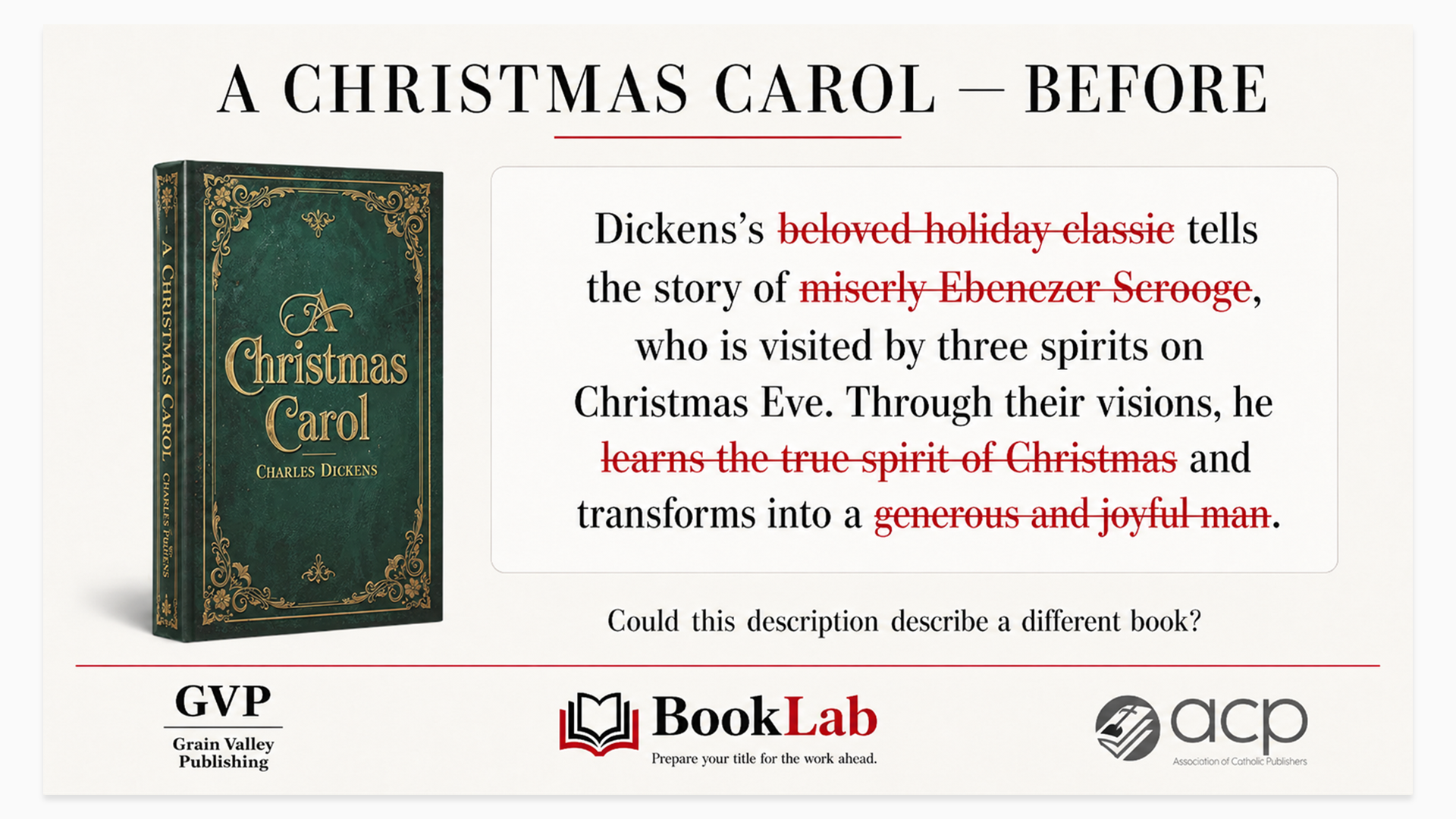
A book every member of this room knows. A text in the public domain for one hundred and eighty years. Described the same way for almost as long.
We ran it through the full BookLab process to show what becomes visible when the source text is read for what it actually is. The before and after are below.
Source-grounded. Human-reviewed. Built for your house.
Discovery and Book DNA
We learn your house, then read the source text in full. The themes the author put on the page, named or not. The moral framework underneath the story.
The package
Positioning Memo. Copy for every audience. Metadata built for how discovery works now. Reader and buyer avatars. Channel-specific outreach. A Publisher Brief readable in five minutes.
Title Memory
The whole package goes into a notebook the publisher owns. It remembers what was decided and why. It does not forget when the staff member who knew the answer walks out the door.
You are the final word. Always.
Not passive spectators. Builders.
Three days before the membership meeting, Pope Leo released Magnifica Humanitas, his first encyclical, on safeguarding the human person in the age of artificial intelligence.
Catholics should not be passive spectators of this technology. They should shape it.
BookLab is one publisher's answer to that instruction. A disciplined process. Source-grounded. Human-governed. In service of books that already passed the editorial test.
A second layer is coming.
The BookLab process gets a title ready for the rooms it should be in. The next layer is about getting it into those rooms. Catholic schools, parish formation offices, diocesan resource networks.
We are in early conversations with potential partners on what that layer looks like. When there is something to share, the ACP Online Community will hear it first.
Start with the title you have been thinking about.
A free thirty-minute conversation. You tell us about the title. We tell you what we see. If it makes sense to go further, we talk about that. If it does not, you have lost nothing but half an hour.
Visit the BookLab Page grainvalleypublishing.com/booklabMake the most of the books you believe in.
Think better. Move faster. Make the most of the books you believe in.
